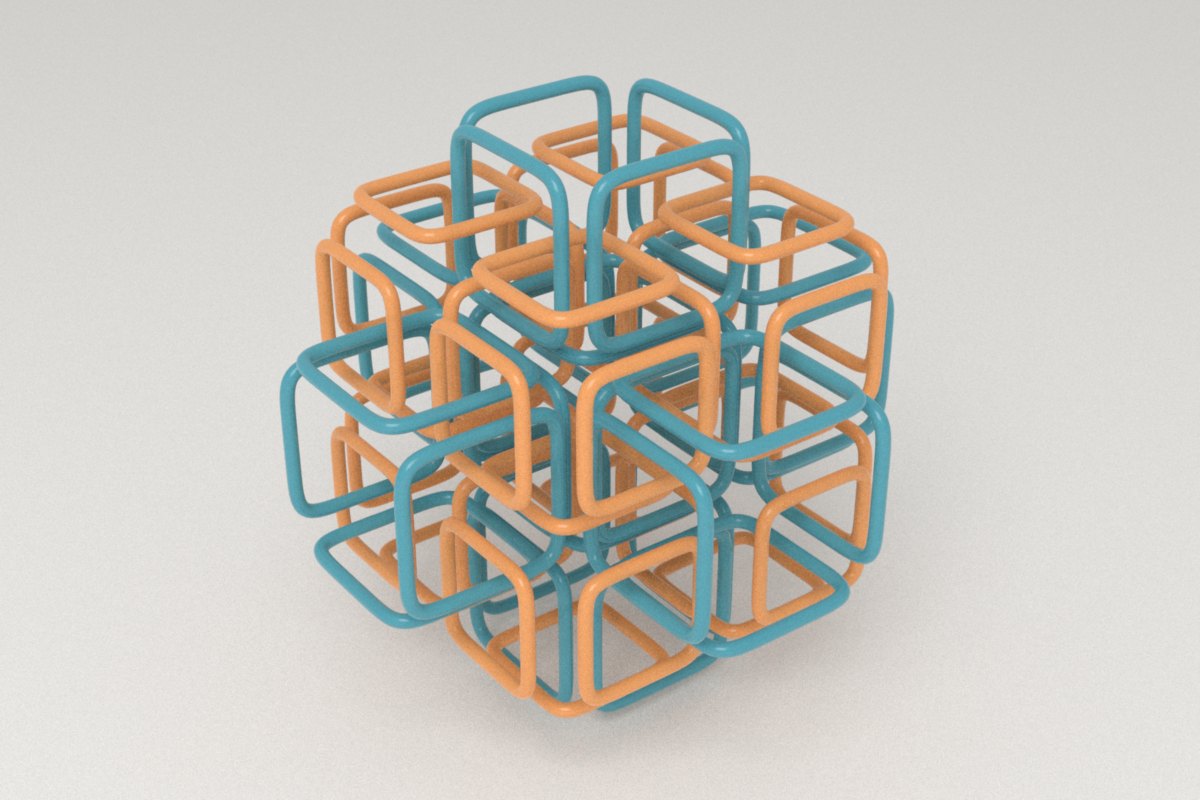
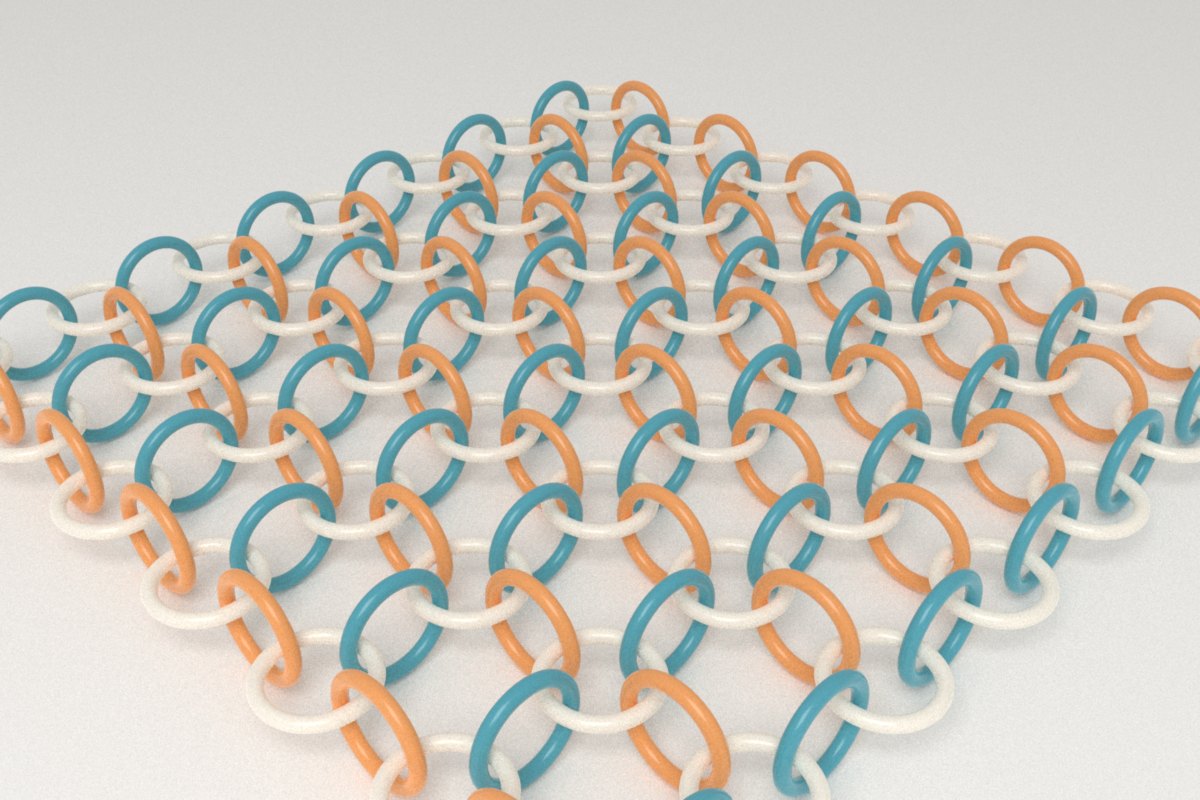
Computer graphics · Geometry · Fabrication
Tolga Talha Yıldız
I am a PhD student in Computer Science at Texas A&M University, advised by Prof. Ergun Akleman. I study how threads, rings and ribbons can interlock to form new kinds of structures, and I build the theory and tools to design and fabricate them.

Research
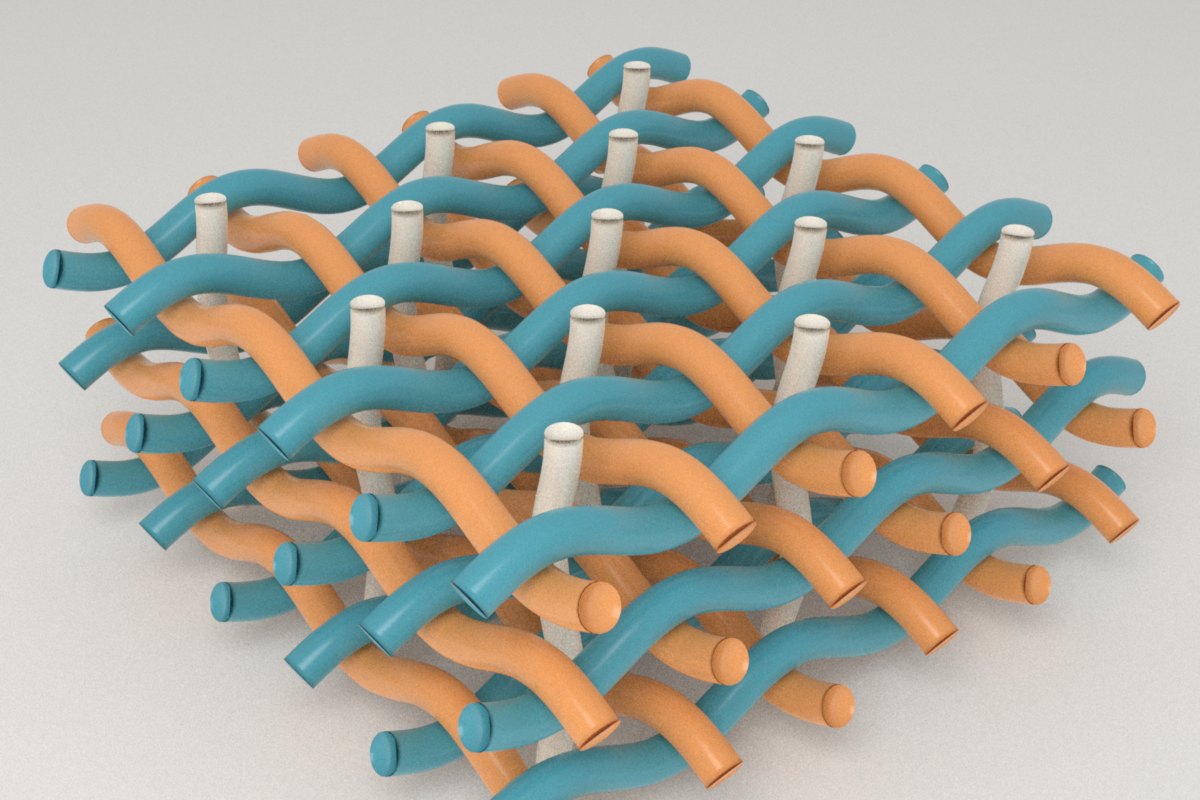
Woven structures
Weaves that fill space on their own, from congruent tiles to volumetric weaves classified by Bravais lattices.
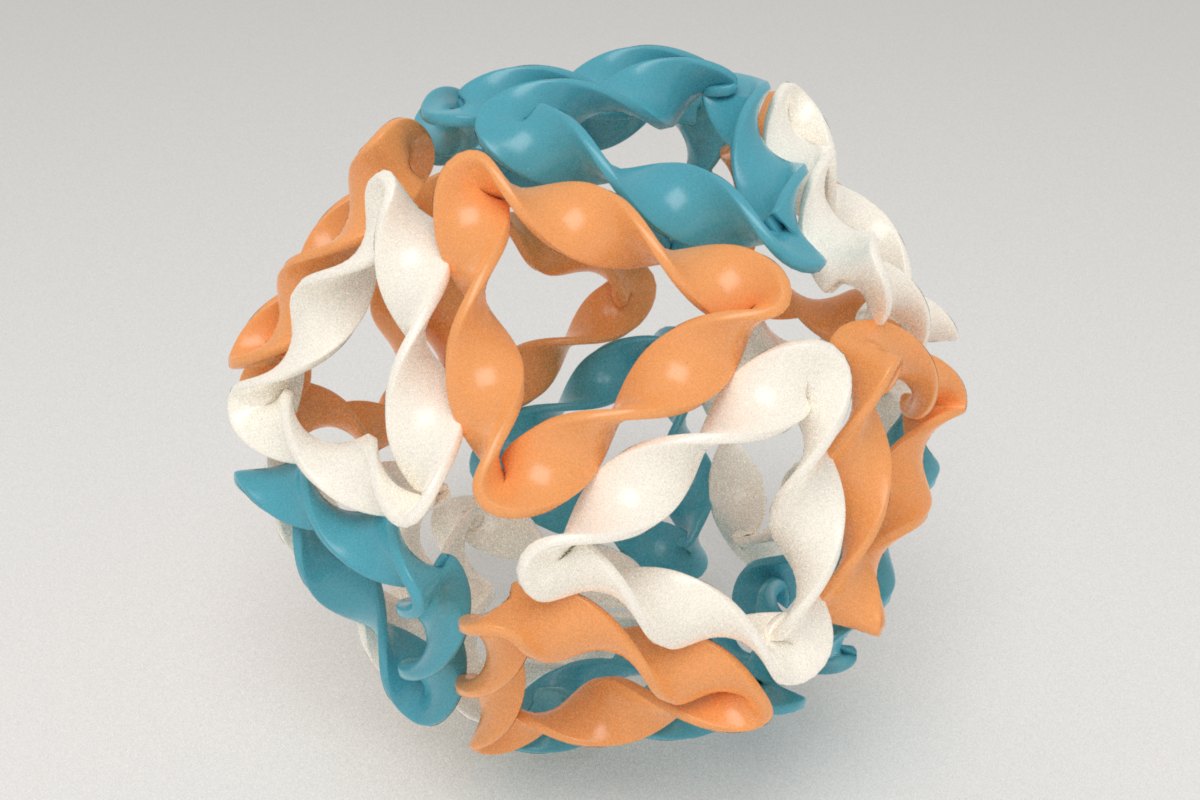
Links, knots and polycatenanes
Periodic links, catenated 3D graphs and twisted-edge meshes that describe interlocked structures in one framework.
Modeling and fabrication
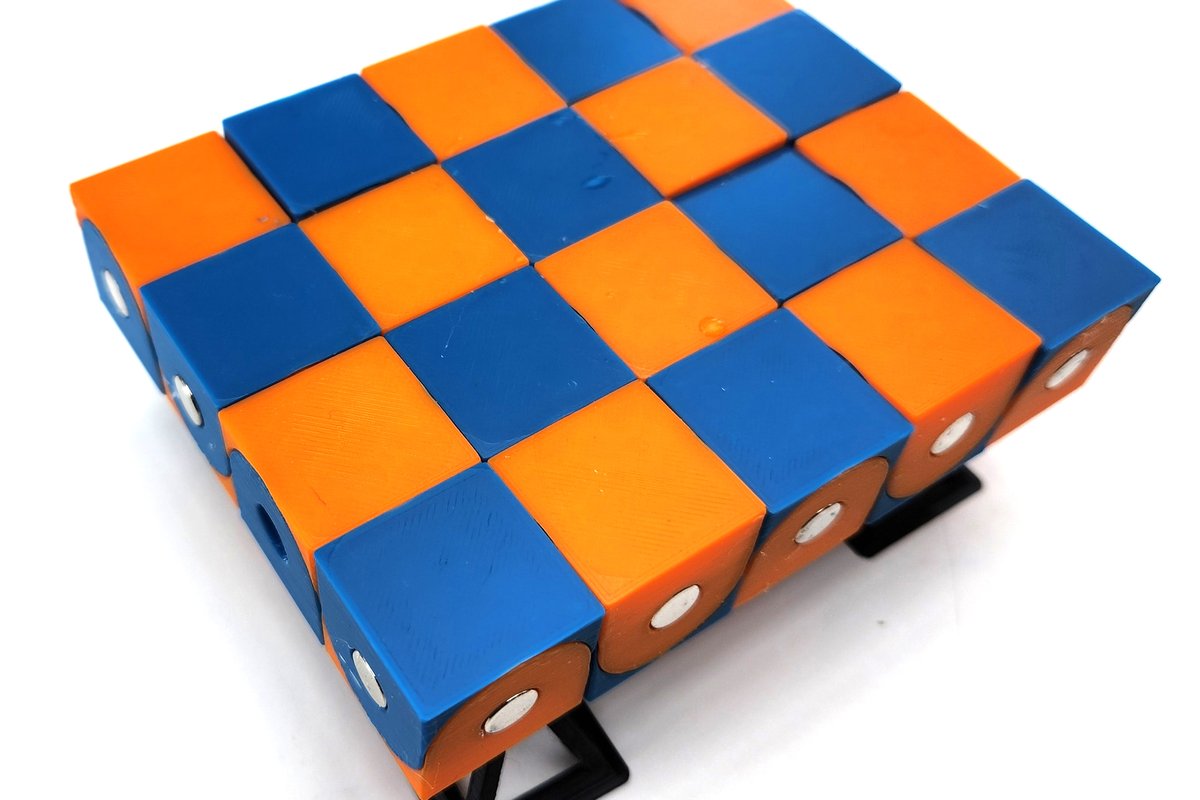
Implicit modeling operators, polyhedral frames and fabricated objects that turn these structures into things you can hold.
About
My research sits where computer graphics, computational geometry and topology meet. Much of it asks a simple question: when can a set of identical pieces lock together into a strong structure without glue or a filler material? Fabrics answer it with threads, chainmail answers it with rings. I look for the general rules behind these answers and turn them into design tools.
Recent work in this direction:
- Weaves in 3D. We showed that a single congruent tile can build any bi-axial weave, and developed a constructive framework that discovers and classifies volumetric weaves from Bravais lattices (PNAS Nexus 2025).
- Links and knots. Triply periodic linked structures built on Bravais lattices and their Wigner-Seitz cells, primal-dual polycatenanes from labeled 3-honeycombs, and a unified view of linked knot structures through hypergraph rotation systems (ACM TOG 2026) and twisted edges on non-manifold meshes.
- Modeling and fabrication. Hölder–Minkowski operators for associative averaging in implicit modeling, volumetric nonwoven polyhedral frames, and fabricated interactive objects that route light through optical pathways.
Going forward I want to make these structures practical: design software that lets anyone go from a mesh to a printable interlocked object, and fabrication studies that measure how topology controls stiffness, flexibility and assembly. I plan to release some of this software on the projects page.
Before Texas A&M, I studied Electrical and Electronics Engineering at Bilkent University and worked on non-line-of-sight imaging at the Graphics and Imaging Lab in Zaragoza, Material Point Method simulation at Bilkent, and reinforcement learning at ASELSAN.
News
| Apr 2026 | New preprint: Twisted Edges, a unified framework for designing linked knot structures from labeled non-manifold surface meshes. |
|---|---|
| 2026 | Hölder–Minkowski transcendental operators for implicit modeling is published in Computer-Aided Design. |
| 2026 | Primal-dual polycatenanes is published in Computers & Graphics. |
| 2026 | Hypergraph Rotation Systems, a unified framework for linked knot structures, is published in ACM Transactions on Graphics. |
| Fall 2025 | Started as a research assistant on a DARPA project that studies the brain through the geometry and topology of its surface, using the brain’s medial graph. |